



Lumbar Support: Your Back's Best Friend at Work
Platinum-Level,LLC Media

Understanding the Anatomical Foundation of Lumbar Support
The lumbar region, comprising five vertebrae designated L1 through L5, bears the considerable responsibility of supporting the upper torso while maintaining the spine's natural lordotic curvature. This inward curve, essential for optimal biomechanical function, faces constant gravitational forces during prolonged sitting. Without adequate support, the intervertebral discs experience asymmetrical compression, leading to potential degeneration and discomfort.
Modern seating environments often fail to accommodate this critical spinal architecture. Conventional chairs frequently promote posterior pelvic tilting, flattening the lumbar curve and redistributing pressure inefficiently across the vertebral column. This postural deviation initiates a cascade of musculoskeletal adaptations that compromise long-term spinal health.
Comprehensive Lumbar Support Benefits for Professional Environments
Postural Optimization and Spinal Alignment
Ergonomic lumbar support mechanisms maintain the spine's natural sagittal plane curvature, preventing deleterious postural adaptations. This support reduces intradiscal pressure by approximately 30-40% compared to unsupported sitting positions. The physiological benefits extend beyond immediate comfort, encompassing long-term spinal health preservation.
Professional environments demanding extended sitting durations particularly benefit from adjustable lumbar systems. Call centers, control rooms, and executive offices require seating solutions that accommodate diverse anthropometric measurements while maintaining consistent spinal support throughout varying work tasks.
Enhanced Circulation and Reduced Muscular Fatigue
Proper lumbar positioning facilitates optimal venous return and lymphatic drainage from the lower extremities. When the pelvis maintains appropriate positioning through lumbar support, the femoral vessels experience reduced compression, promoting healthier circulation patterns. This physiological improvement translates to decreased lower limb edema and enhanced cognitive performance through improved cerebral perfusion.
Research indicates that employees utilizing ergonomic lumbar support report 23% less end-of-day fatigue compared to those using standard seating configurations.
Productivity Enhancement Through Comfort Optimization
Discomfort serves as a significant cognitive distractor, fragmenting attention and reducing task efficiency. Lumbar support benefits extend to measurable productivity improvements through sustained concentration capabilities. Gaming professionals and streamers, who often maintain seated positions for extended periods, experience enhanced performance consistency when utilizing appropriate lumbar mechanisms.
Technical Specifications and Adjustment Mechanisms
Contemporary lumbar support systems incorporate sophisticated adjustment mechanisms to accommodate individual anatomical variations. Pneumatic height adjustment, depth modulation, and firmness control enable precise customization for optimal spinal positioning.
| Adjustment Type | Range | Primary Benefit |
|---|---|---|
| Vertical Height | 3-5 inches | Targets specific lumbar vertebrae |
| Depth Projection | 0.5-2 inches | Accommodates varying torso depths |
| Firmness Control | Variable pressure | Personalizes support intensity |
Material Considerations and Durability Factors
High-performance lumbar support systems utilize advanced materials engineered for sustained elasticity and pressure distribution. Memory foam formulations with open-cell structures provide consistent support while maintaining breathability. Mesh alternatives offer enhanced ventilation characteristics, particularly beneficial in temperature-controlled environments.
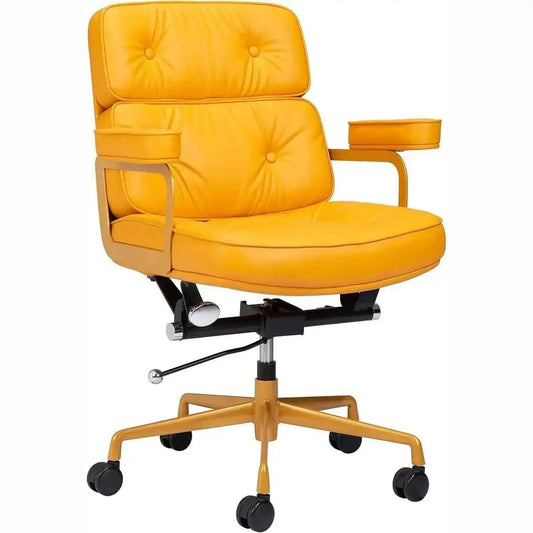
Premium seating solutions incorporate LeatherSoft upholstery with integrated lumbar mechanisms that maintain structural integrity under heavy usage conditions. These materials resist deformation while providing tactile comfort essential for extended sitting periods.
Frequently Asked Questions About Lumbar Support Implementation
How should lumbar support be positioned for optimal effectiveness? The support mechanism should contact the lower back at the level of the natural lumbar curve, typically between the third and fifth lumbar vertebrae. Proper positioning creates gentle forward pressure without causing excessive extension.
Can lumbar support accommodate different body types effectively? Modern adjustable systems accommodate anthropometric variations through multi-dimensional positioning capabilities. Individuals with varying torso lengths and spinal curvatures can achieve optimal support through systematic adjustment protocols.
- Assess individual lumbar curve depth and location
- Adjust support height to target L3-L4 vertebral levels
- Modify projection depth for comfortable pressure distribution
- Fine-tune firmness based on personal comfort preferences
The integration of comprehensive lumbar support systems represents a fundamental investment in occupational health and productivity optimization. Professional environments prioritizing employee wellbeing through ergonomic seating solutions demonstrate measurable returns through reduced absenteeism and enhanced performance metrics.