



Back Support Cushion For Long Sitting Comfort That Lasts
Platinum-Level,LLC Media

Prolonged sedentary work exacts a formidable toll on spinal health, often manifesting as chronic lower back discomfort that undermines productivity and overall well-being. Whether navigating extended office hours, managing remote workflows, or commanding a gaming station, the human body craves adequate lumbar reinforcement to maintain proper postural alignment. Without ergonomic intervention, vertebral compression and muscular fatigue accumulate, transforming routine sitting into an arduous ordeal.
Understanding Lumbar Support and Its Critical Role
The lumbar region—comprising the five vertebrae between the rib cage and pelvis—bears substantial mechanical stress during seated activities. This curvature naturally arches forward, yet conventional seating frequently fails to accommodate its anatomical contour. A lumbar support cushion bridges this gap, cradling the lower back's convex shape and distributing gravitational forces more equitably across spinal structures.
Ergonomic seat cushions engineered for lumbar reinforcement employ memory foam, gel matrices, or advanced polymer blends that conform to individual physiology. These materials sustain compression resilience over countless hours, ensuring the vertebral column remains in a neutral, strain-minimizing posture. By mitigating anterior pelvic tilt and sacral slumping, such accessories reduce intervertebral disc pressure and alleviate the muscular guarding that precipitates discomfort.
Selecting the Optimal Lumbar Support Seat Cushion
Choosing a back pain cushion necessitates scrutiny of several pivotal attributes. Firstly, material density dictates longevity and adaptive responsiveness; high-grade memory foam retains shape integrity across thousands of compression cycles without bottoming out. Secondly, breathability prevents heat accumulation—mesh overlays or perforated designs facilitate airflow, maintaining comfort during marathon sessions.
Adjustability represents another cornerstone feature. Premium lumbar support seat cushions incorporate removable or repositionable components, enabling customization for diverse torso lengths and curvature profiles. Universal compatibility with office chairs, automotive seats, or gaming thrones expands utility, rendering a single accessory suitable for multiple environments.
Evaluating Thickness and Contour Geometry
Thickness specifications warrant careful consideration. Excessively thin cushions deliver insufficient corrective pressure, while overly bulky variants may force users too far forward, compromising desk ergonomics. The ideal lumbar support cushion maintains a graduated thickness—firmer at the apex corresponding to L3-L4 vertebrae, tapering gently toward peripheries to avoid creating pressure concentrations.
Contour geometry should mirror the spine's natural lordotic curve. Anatomically sculpted profiles outperform flat designs, actively promoting proper postural alignment rather than passively filling voids. Some sophisticated models feature dual-layer construction, pairing a firm foundational core with a plush contact surface for optimal balance between support and tactile comfort.
Introducing a Premium Solution for Enduring Comfort
Professionals seeking a robust intervention for lower back distress will find exceptional value in the Lumbar Support Seat Cushion available from Platinum-Level Office Chairs. This meticulously designed accessory addresses the multifaceted demands of extended sitting through intelligent material engineering and anatomical precision.
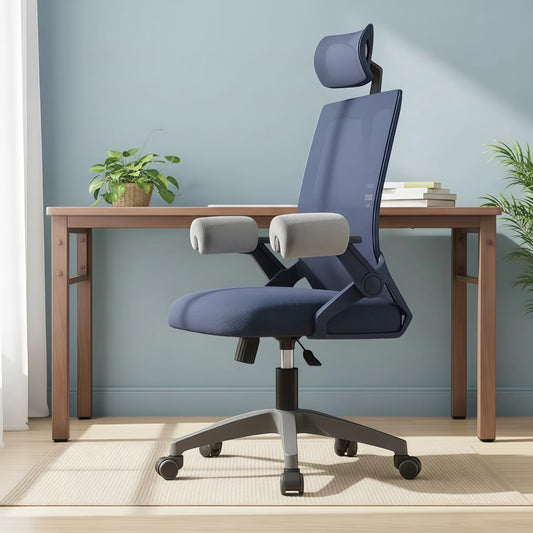
Crafted to complement the brand's philosophy of ergonomic excellence, this lumbar support cushion set back pain cushion integrates seamlessly with executive chairs, task seating, and even residential furniture. Its versatile mounting system accommodates varied chair geometries, while the moisture-wicking fabric overlay ensures prolonged freshness. By restoring lumbar lordosis and redistributing seated load, this accessory transforms any chair into a sanctuary of sustained postural health.
Benefits of Ergonomic Seat Cushions for Office Chairs
Implementing an ergonomic seat cushion for office chair configurations yields dividends extending beyond immediate discomfort relief. Enhanced circulation results from reduced sciatic nerve compression, diminishing numbness and tingling sensations in the lower extremities. Improved pelvic alignment cascades upward, relieving cervical strain and reducing headache frequency among desk-bound individuals.
Productivity metrics often demonstrate measurable improvement when workers transition to supportive seating accessories. Reduced fidgeting and fewer breaks for postural relief translate to sustained focus intervals. Moreover, proactive spinal care curtails absenteeism linked to musculoskeletal complaints, delivering tangible returns for organizations prioritizing employee wellness.
Office Chair Lumbar Support for Lower Back Pain
Chronic lower back pain ranks among the most pervasive occupational health challenges globally. Office chair lumbar support for lower back pain interventions function prophylactically and therapeutically—preventing nascent discomfort from escalating into debilitating conditions while providing symptomatic relief for existing injuries.
Clinical evidence suggests consistent use of lumbar support accessories reduces pain intensity scores and improves functional mobility. By maintaining intervertebral spacing and limiting abnormal facet joint loading, these devices slow degenerative cascades that might otherwise necessitate invasive treatments.
Maximizing Longevity Through Proper Maintenance
Even the best lumbar support for office chairs requires conscientious upkeep to preserve performance characteristics. Regular inspection for compression set—permanent deformation under load—enables timely replacement before support efficacy wanes. Most quality cushions feature removable, machine-washable covers that facilitate hygienic maintenance without compromising structural integrity.
Rotation schedules, alternating between multiple cushions if feasible, distribute wear more evenly and extend aggregate lifespan. Storage in climate-controlled environments shields materials from temperature extremes and humidity fluctuations that accelerate degradation.
Frequently Contemplated Questions
Can a back support cushion for long sitting truly rectify poor ergonomics, or must one replace the entire chair?
While premium seating embodies comprehensive ergonomic design, a thoughtfully selected lumbar support cushion delivers substantial corrective benefits at a fraction of replacement costs. It addresses the most critical deficiency—lumbar void—present in many otherwise adequate chairs, making it a pragmatic first-line intervention.
| Feature | Benefit |
|---|---|
| High-density foam | Sustained shape retention |
| Contoured design | Anatomical alignment |
| Breathable fabric | Temperature regulation |
| Adjustable straps | Universal compatibility |
Integrating Support Accessories Into Your Workspace
Optimal results emerge when lumbar support complements holistic ergonomic practices. Monitor height, keyboard placement, and foot positioning collectively influence spinal loading patterns. A comprehensive approach—pairing ergonomic seat cushion accessories with proper workstation geometry and periodic movement breaks—cultivates an environment conducive to musculoskeletal wellness.
Professionals committed to preserving spinal vitality recognize that incremental interventions compound over time. The modest investment in a quality lumbar support seat cushion yields dividends measured in reduced discomfort, enhanced focus, and prolonged career longevity free from debilitating back ailments.